
The Eternal Coin, Part 7 – Elena's Reward
Romania, 2024.
The village was small, tucked between rolling hills and narrow dirt roads, the kind of place the world often forgot. Its elderly residents moved slowly, their lives quiet and constrained by poverty. Elena had grown up here, and though her own life had not been easy, she had devoted herself to caring for the village’s old people after her mother passed away. She brought some of them meals, cleaned their modest homes, listened to their stories, and soothed their loneliness with patience few could demonstrate.
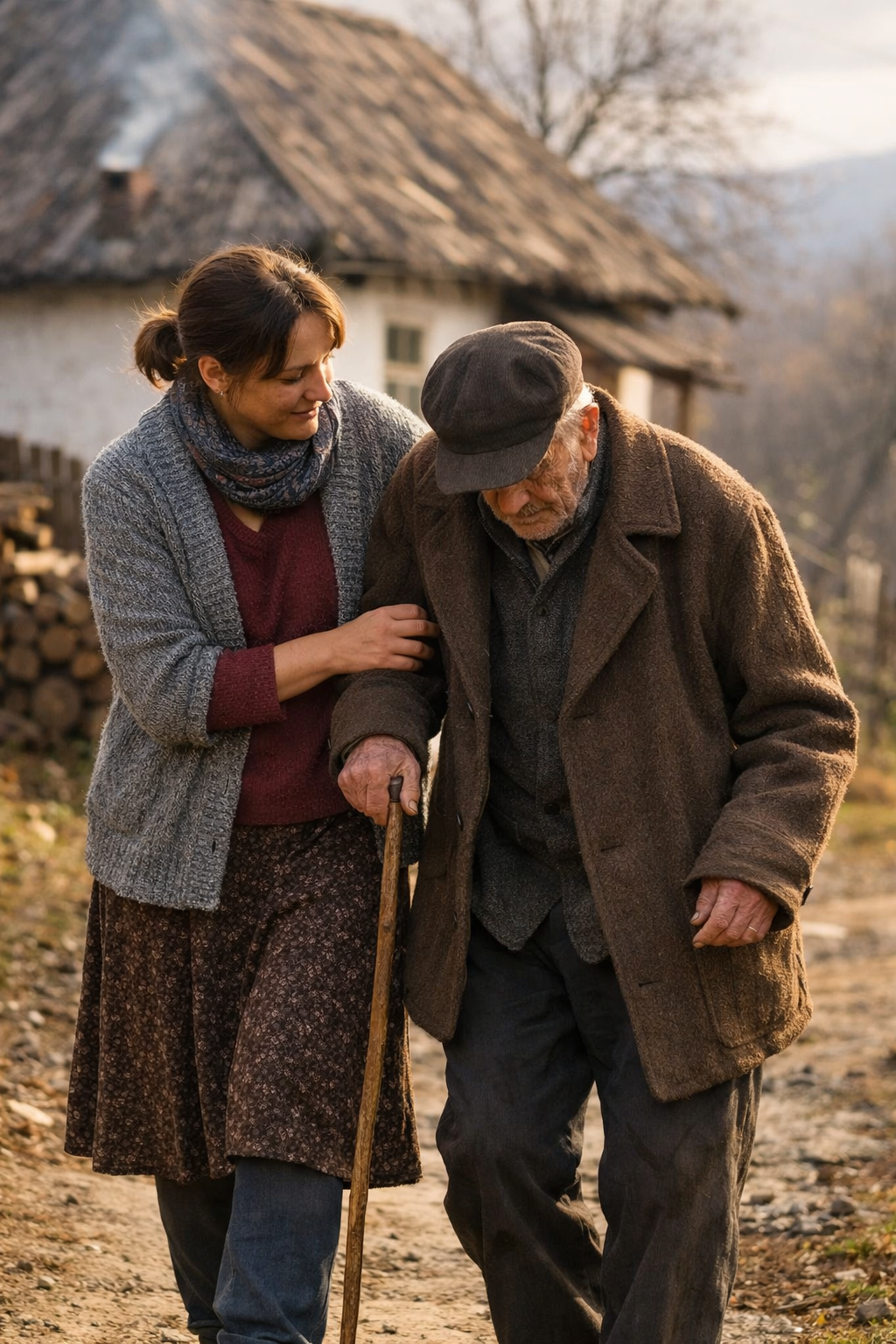
That morning, a bitter October wind had swept through the streets, rattling shutters and sending a chill through the brittle bones of the village’s oldest inhabitants. One of the frailest, old Mr Petrescu, had fallen while collecting water from the village well. Seeing this, Elena went to him, lifting him, comforting him, and helping him back to his cottage. She stayed until he rested peacefully and bade farewell. Petrescu stood up and hugged her through her heavy coat.
Later, as she walked back to her modest home, her fingers hit something cold in her coat pocket—a coin, small, like 50 bani, but from another era perhaps. She didn’t remember putting it there, and guessed Petrescu had slipped it into her pocket. Its surface gleamed faintly in the afternoon light, and a strange warmth ran up her arm. She paused, curious, then shrugged it off. It had been a long day, and she had housework to do.
That night, Elena fell into a deep, dreamless sleep. But when she awoke, the world had shifted.
It was Romania still, but not the same. The streets were smoother, the houses larger, the air cleaner, the hills greener in a way she had never known. She stood in the middle of a comfortable home filled with sunlight, the kind of home she had never imagined owning. The coin lay on the wooden table, exactly as it had in her pocket, yet now it seemed alive, vibrating faintly as if impatient. The year was 2031.
Elena explored the house. She discovered she had wealth, not flaunted or luxurious, but enough to live comfortably and freely, free from the worries of daily survival. The money was unearned by her own hand, yet she felt no guilt; the coin had probably carried her here, rewarded her for her lifelong kindness to others.
But comfort did not dull her purpose. If anything, it amplified it. She could now hire helpers to care for the elderly, buy medicines, repair roofs, and fund small projects in the village. Children who had no access to education could now attend school. Her small acts of kindness were no longer limited by poverty or fatigue. She could multiply them.
That evening, as she prepared dinner for the village elders she had brought into her home, Elena noticed the coin again. It lay on the table, innocuous, yet humming with that subtle pulse she had felt before. She understood, now, what it was. It had carried her forward, given her the means to do more good, more deeply than she ever could in her old life. And she accepted it, humbly, not as a gift to herself, but as a tool to extend kindness through time, to let her compassion ripple further than she had ever dreamed.
Somewhere, in the pulse of the coin, centuries of lives converged: the courage of Andrei in 1944, the sacrifices of nameless villagers, the small acts of love repeated endlessly. And Elena, smiling softly as she served soup to the elders, felt the weight of it all and the lightness of her new life intertwined, the coin’s journey continuing silently, unstoppable, eternal.
Who would hold it next… and what would they become?

Member discussion