
Letter from the Past
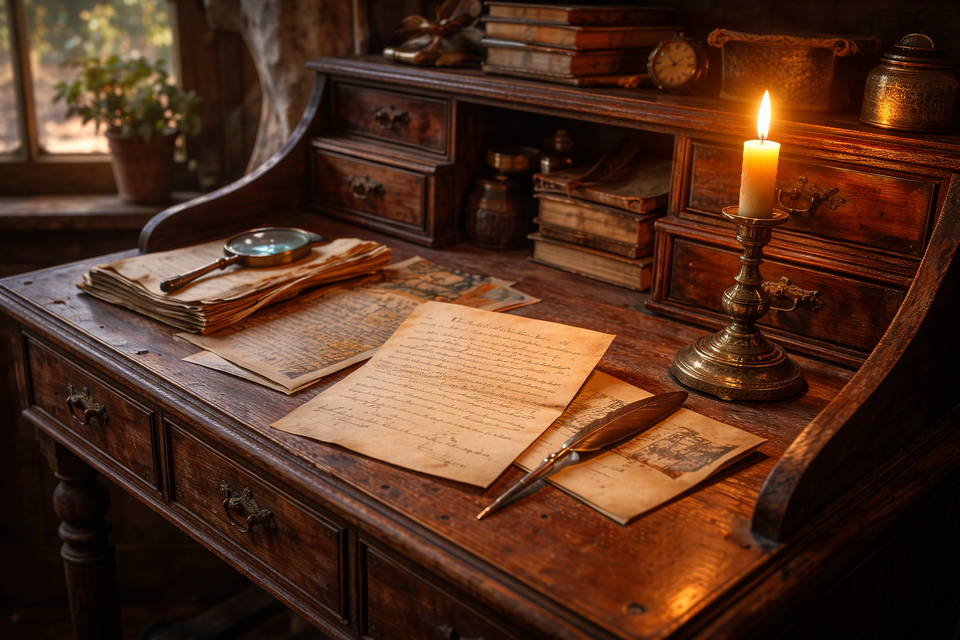
Andra had always loved the charm of Buzău, but the city now felt like a soft echo of her childhood. On a recent trip home from Bucharest, she wandered the quiet streets and found herself in an old antique shop, tucked between cafés and bookstores. Among the dusty shelves, a writing desk caught her eye. Its wood was warm and worn, drawers slightly crooked, brass handles polished by hands long gone. She could picture it in her Bucharest apartment, a piece of her past anchoring her present.
The shopkeeper smiled knowingly. “This one’s got history,” he said. Andra laughed softly, imagining the stories it could tell. She eventually bought it, thinking of her apartment filled with antique furniture and memories, and had it delivered directly to Bucharest in the following weeks.
Once back in Bucharest, Andra eagerly awaited the delivery of her new desk. Eventually, the call came, and the desk arrived and got a neighbour to help her carry the desk up to her apartment. Some days passed before she carefully emptied the desk of dust and crumbs, wiping away decades of grime. As she pulled out the drawers, a folded letter slipped from the back of one. Its handwriting was ornate, almost calligraphic, a conversation between family members long gone, she supposed. She unfolded it and read quietly, a shiver running down her spine. The words were warm, intimate, filled with concern and love, but at the bottom, in neat ink, was an address she recognised: a now-abandoned house in old Buzău. Beyond that, the letter contained instructions on where to find a back door key, under a capstone on the rear garden wall. She didn't imagine it was still valid information, though.
Andra’s pulse sped up a little. The thought of returning to her hometown always raised her spirits, but this time filled her with anticipation; now, there was a thread connecting past and present, calling her to discover something hidden. A few weeks passed before she was able to return to her mother's house, but when the time came, she packed her usual bag and set out early the next morning with her trusty Zada at her side, the letter folded in her pocket like a secret compass.
The streets of old Buzău guided her toward the outskirts, where forests hugged the hills and whispers of forgotten paths beckoned. Zada, now unleashed, bounded ahead, sniffing and exploring with joyous energy. Soon, she found it: the house from the letter, half-hidden behind overgrown ivy, shutters hanging askew, the roof sagging under years of neglect, and unoccupied.
Stepping through the rusted gate, Andra felt a strange warmth, as if the house had been waiting for her. She made her way through the overgrown rear garden and indeed found the real wall was still standing. Atop was a line of capstones from one end to the other. One by one, she lifted each until beneath one, sure enough, was an old metal key.
Excited, she quickly went to the door and tried it, not expecting any success. But amazingly, the key, although very stiff, worked in the lock. It took some force and repeated effort to barge open the swollen wooden door, but eventually it gave way to her persistence. Inside, the dust danced in the golden light filtering through cracks in the roof. The rooms were lined with shelves of old books, wooden chairs, and cupboards, remnants of a life frozen in time. Zada padded through the hallway, nose twitching at every corner.
Andra wandered into a small study. In a drawer of a drinks cabinet, there was a wooden box, carved with intricate patterns, reminiscent of the desk she had bought. She opened it carefully. Inside were letters, photographs, and tiny trinkets, preserved as if time itself had been protecting them. Each object told a story-family gatherings, celebrations, and the quiet rhythms of daily life in Buzău decades ago.
A soft hum filled the room, like wind through the trees. Andra realised she wasn’t just uncovering objects; she was touching lives, hearing echoes of people who had loved, worried, and hoped long before her. The house seemed alive, whispering in a language of memory and belonging.
Zada nudged her leg, impatient to explore, and Andra followed him, returning to the back of the house, where the small garden overrun with ivy glowed with an almost ethereal light. It was a place out of time, where the boundaries between past and present blurred. She knelt in the damp grass, touching a flower, and felt a sense of clarity: the adventure wasn’t just about the house, or the letters, or the desk. It was about the connection between generations, the way memories shape us, and the courage to explore both history and our own lives.
Andra left the house as she found it and returned the key, but kept the letters, feeling somehow she had a right to them since finding the letter in her recently acquired writing desk, which was clearly once kept in this abandoned house, and probably the letter she first found was drafted there too. She returned to her mother's house in the town for a few days before finally setting off for her home in Bucharest. She carried a few letters and trinkets, thinking how she would arrange them on her desk, a bridge between the past and present. The forest and the abandoned house had reminded her of something profound: adventure is not always about faraway lands, but about noticing what has been quietly waiting for you all along.
Back in her apartment, Andra placed the letters beside the antique desk. Zada curled up at her feet, tail wagging lightly. Andra smiled, feeling the pulse of Buzău, the legacy of family, and the thrill of discovery. Life, she realised, was a series of doors. Some you open yourself, and some that are nudged open by chance or a small piece of history. And adventure or mystery often waits just on the other side.

Member discussion