
How AI use is controlled in Romanian Real Estate listings
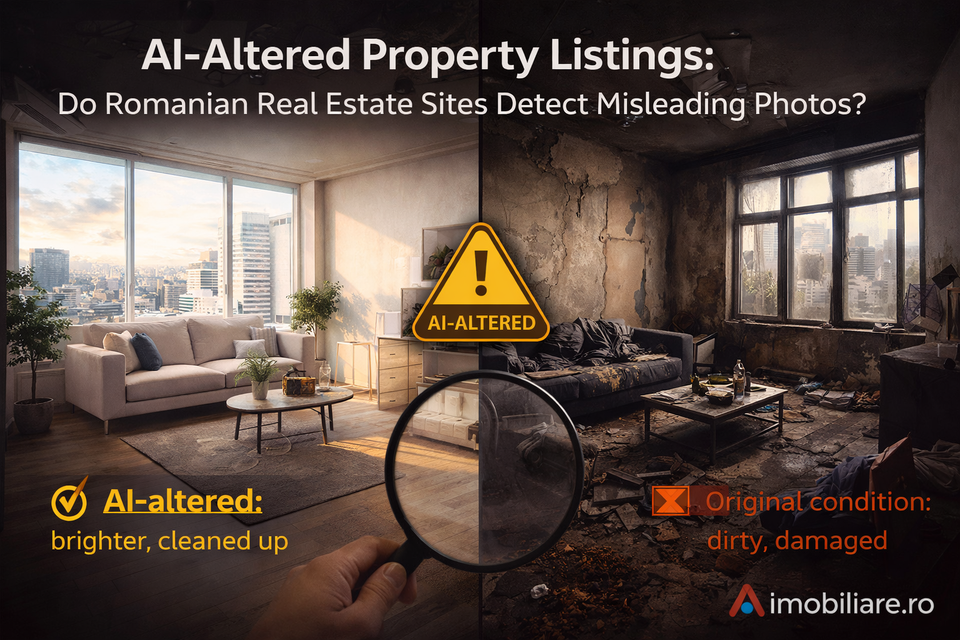
Romania currently has only limited, indirect measures addressing AI-generated or AI-altered property listings. Most controls still rely on general accuracy rules, manual moderation, and consumer-protection law, rather than specific AI-detection or labelling policies. However, this is beginning to change due to the EU AI Act and heightened scrutiny of platforms.
The current situation is that rules do exist, but so far, they have not been aimed at technology.
Ro property portals so far do not yet have explicit AI rules, but they do require listings to be truthful. For example, the major one, Imobiliare.ro requires that images must not be misleading, must reflect the actual condition of the property, and must correspond to the property advertised. (Imobiliare.ro)
Similarly, listing platforms (Imob, OLX, Storia, Publi24, Romimo, etc etc) usually state that photos must relate to the real property, unrelated or misleading images are frowned upon or, in some cases, not permitted, and the advertiser (agent or owner) bears legal responsibility for the content. (First.ro)
This means AI-altered images could theoretically violate terms in some cases, but enforcement is so far complaint-based only.
Portal moderation is basically manual at this moment:
Local property portals moderate listings, but mainly to enforce basic quality and fraud rules.
Platforms, e.g., Imobiliare.ro, state that listings can be moderated or restricted before or after upload if they breach platform rules or contain misleading content. (Imobiliare.ro)
However, my experience suggests that moderation is primarily manual, AI-alteration detection tools are not widely disclosed, platforms rely heavily on user reports and agency accountability.
This is similar to many European property portals, i.e., no detection policies seem to be in place so far.
There is little evidence that Romanian portals systematically detect AI-generated images, such as synthetic interiors, digitally expanded rooms, AI-enhanced lighting or views.
Unlike some international MLS systems, Romanian platforms have not widely introduced mandatory AI labelling, automated AI-image detection, or rules limiting undeclared virtual staging. Instead, most portals treat the issue under general misleading advertising rules.
Agencies remain legally responsible:
Even without AI-specific policies, misleading listings can already be problematic under consumer protection law and advertising law.
Romanian listing platforms typically state that the advertiser bears legal responsibility for the listing’s accuracy. (First.ro)
This creates a legal risk for agents who heavily alter photos without disclosure.
EU regulation will likely change this as Romania is subject to the EU Artificial Intelligence Act, which came into force in 2024 and will phase in requirements through 2025–2026. (LYNX legal). The regulation introduces transparency obligations for some AI systems and may require clearer disclosure of synthetic content in some contexts. (maglas.ro). While property listings are not classified as “high-risk AI,” the regulation is expected to push platforms toward better AI transparency, watermarking or labelling of synthetic media, AND clearer content moderation policies.
What proactive steps some companies are exploring
While not widespread yet, industry discussions in Romania suggest a few potential or emerging approaches:
A/ AI used internally by agencies
Some companies are using AI tools to:
- generate descriptions
- automate listings
- qualify leads.
- respond to enquiries
For example, Romanian platforms promoting AI tools claim they can automate prospecting and communication workflows for agencies. (imobiliareai.ro)
But these tools focus on marketing automation rather than listing authenticity checks.
B/ Increasing moderation pressure on portals
Property platforms are aware that misleading visuals damage trust. Industry spokespeople note that misleading listing images can create more buyer complaints, legal risk, and reputational damage for platforms hosting the listings. (LinkedIn)
This is pushing portals toward stricter moderation policies over time.
Practical reality on the Romanian market
In practice, AI-edited photos are increasingly appearing, especially via virtual staging, AI-generated descriptions, and photo enhancement tools.
But currently, few listings explicitly disclose AI editing, enforcement is inconsistent, and detection systems are rare or undisclosed.
The issue is therefore largely unmanaged at the platform level for now.
Summary:
Romania is in an early stage of dealing with AI-altered property listings. Platforms already prohibit misleading photos, but rules are technology-neutral; AI-specific detection or labelling systems are not yet common. Responsibility still falls mainly on agents and advertisers. The EU AI Act and increasing consumer scrutiny will likely push portals to introduce clearer rules over the next few years.





Member discussion