
Champion of Christ - Stefan, Voivode of Moldova
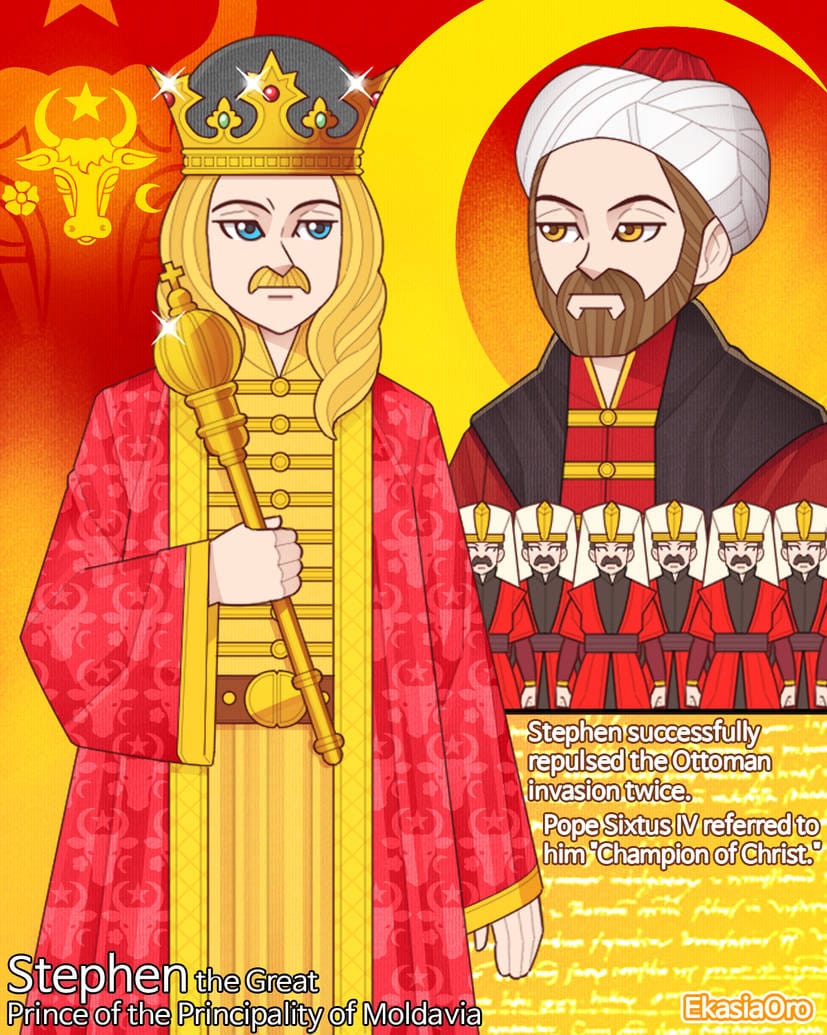
The winter of Moldova lay heavy upon the land, and with it came the shadow of invasion. The Ottoman army advanced like an iron tide, certain that numbers alone would crush the small principality standing in its path. Villages emptied, bells tolled prayers instead of warnings, and every road led toward Vaslui. Stefan, voivode of Moldova, rode among his men without ornament or ceremony.
His armour was scarred, his cloak worn by years of campaigns. He had known victory, and he had known defeat. Tonight, on the eve of battle, he knew only the weight of responsibility. When darkness fell, Stefan dismissed his captains and walked alone to a small wooden chapel at the edge of the camp. It was humble, built by soldiers’ hands, its icons darkened by smoke and time. He lit a candle and knelt.“I have done all that a man can do,” he whispered. “I have gathered my people, chosen the ground, prepared the trap. If Moldova is to stand tomorrow, it will be by Your will, not by my strength.”Outside, the wind carried distant sounds of the enemy camp. Drums. Laughter. Confidence. The candle flame trembled. The air grew cold, sharper than winter itself. Stefan felt the silence thicken, as if the world were holding its breath.
Then he sensed another presence in the chapel, not born of fear, but of memory. A pale figure stood near the altar, shaped like mist under moonlight. Stefan rose slowly. He knew the face before his mind accepted it.“Vlad,” he said quietly. Vlad Tepes, once ruler of Wallachia, once ally, once brother in blood and war. Death had stripped him of cruelty, leaving only clarity. His eyes were calm, piercing, unburdened by flesh.“You pray like a man who already knows the answer,” Vlad said. His voice did not echo. It simply existed. “Why ask again?”“Because I am afraid,” Stefan replied. “And fear clouds judgment.”Vlad smiled thinly. “Fear sharpens it, if you let it.”Stefan stepped closer. “Tell me then. What do you see that I cannot?”The chapel faded. The walls dissolved into fog, and before them spread the valley of Vaslui. Marshes glistened beneath a low sky.
Narrow paths twisted through reeds and frozen ground. Forest edges loomed like silent witnesses.“I see arrogance,” Vlad said. “And arrogance is heavier than armour. They will advance believing force alone decides wars.”The vision shifted. Stefan saw Ottoman ranks pressing forward, their formation breaking as the ground betrayed them. Fog thickened, mixed with smoke. Horns sounded from false directions. Drums answered where no army stood.“Do not meet them as an army,” Vlad continued. “Meet them as the land itself. Let the valley swallow them.”Stefan closed his eyes, committing every detail to memory.“And the cost?” he asked. Vlad looked at him steadily. “Victory always collects payment. But defeat takes everything.”The chapel returned.
The candle burned steadily once more. Vlad’s form began to thin, dissolving into the air.“Why do you come to me now?” Stefan asked. Vlad’s voice faded like a final breath. “Because you fight not for conquest, but for a people. And because tomorrow, Christ will need a champion who understands sacrifice.”Silence reclaimed the chapel. At dawn, the fog came as foretold. It rolled into the valley thick and low, hiding movement, dulling sound. Stefan rode along his lines, calm, deliberate. He did not offer grand speeches. He gave clear orders. Faith made practical. Courage made quiet. When the Ottomans advanced, their confidence dissolved into confusion.
The ground swallowed hooves and boots alike. Commands vanished into mist. Arrows fell from unseen positions, cold and relentless. Horns cried lies. Drums answered ghosts. Stefan watched from the ridge, unmoving, until the moment arrived.“Now,” he said softly. The Moldavian charge struck not with rage, but with precision. It was not fury that broke the enemy, but inevitability. By midday, the great host was in retreat. By afternoon, the valley was silent again, save for the wounded and the crows already circling. Against all reason, against all numbers, Moldova stood. Stefan dismounted and knelt in the mud, his strength spent. He did not raise his sword. He raised his eyes.“This was not my victory,” he said aloud. “I was only the instrument.”Years later, chroniclers would name him Stefan cel Mare.
The Ottomans would call him a force sent by God. The people would call him protector and father. But Stefan himself would remember only the fog, the prayer, and the ghost who came not to frighten him, but to remind him that faith, when married to wisdom, could change the fate of nations. And so he ruled, not as a conqueror, but as a guardian, bearing the quiet burden of one who had been chosen, if only for a single dawn, to stand as the Champion of Christ.
Member discussion